Claim Your Free Installation Estimate
Skipping annual maintenance leads to higher energy bills and unexpected breakdowns when you need heat most.
Many homeowners in Concord, NC delay or skip their annual furnace inspection, thinking they can save money by waiting until something goes wrong. This mistake costs far more in the long run than the preventive service ever would. When winter temperatures drop into the 20s and 30s during January and February, a neglected furnace faces significantly higher risk of failure at the worst possible moment.
Without annual maintenance, dust and debris accumulate on critical components, reducing efficiency and forcing the system to work harder. Heat exchangers develop cracks that can leak carbon monoxide. Ignition systems corrode and fail. Blower motors wear out prematurely. Small problems that a technician would catch during routine service escalate into major breakdowns that leave families without heat during the coldest nights of the year.
The financial impact extends beyond emergency repair bills. A furnace running without proper maintenance consumes 15 to 30 percent more energy, driving up utility costs throughout the entire heating season. Component failures that could have been prevented with a simple cleaning or minor adjustment often cascade into damage affecting multiple parts, transforming a routine service visit into a costly overhaul or premature system replacement.
Schedule annual hvac maintenance service before the heating season begins, ideally in September or early October. This timing ensures your system receives attention before demand peaks and technicians’ schedules fill with emergency calls. During a maintenance visit, technicians clean burners, test safety controls, inspect the heat exchanger, check electrical connections, lubricate moving parts, and verify proper airflow. These preventive steps catch problems early when repairs remain affordable and manageable.
For homes in Concord where furnaces may sit idle for six to seven months between heating seasons, annual service becomes even more critical. Systems that remain unused accumulate dust, and seals can dry out. The first cold snap of winter reveals problems that developed during months of inactivity, and by then, every heating contractor in the area faces a backlog of similar emergency calls. Homeowners who postponed maintenance find themselves waiting days for service while temperatures drop.
Unusual furnace noises and odors signal problems that escalate quickly into expensive repairs or dangerous conditions.
Unusual sounds and smells from a furnace signal specific mechanical problems that worsen rapidly when ignored. Homeowners who dismiss banging, squealing, rattling, or burning odors as minor annoyances often face emergency shutdowns and expensive repairs within weeks. Each noise or smell indicates a particular failure mode, and recognizing these warning signs early prevents system destruction.
A persistent squealing or screeching sound typically indicates a failing blower motor bearing or worn belt. As the bearing deteriorates, friction increases and metal components begin grinding against each other. What starts as an intermittent squeal becomes continuous noise, and eventually the motor seizes completely. Replacing a bearing costs a fraction of replacing the entire blower assembly, but homeowners who wait too long eliminate the less expensive option.
Banging or booming noises, especially during startup, point to delayed ignition caused by dirty burners or a malfunctioning gas valve. Gas accumulates in the combustion chamber before igniting all at once, creating a small explosion that stresses the heat exchanger. Repeated stress causes cracks in the heat exchanger, the most expensive component in a furnace. A cracked heat exchanger typically requires complete system replacement, transforming a simple burner cleaning into a capital expense.
Burning or electrical smells demand immediate attention and system shutdown. These odors may indicate overheating components, electrical shorts, or damaged wiring. Operating a furnace with electrical problems risks fire. A metallic or oily smell can signal a cracked heat exchanger leaking combustion byproducts into the home, creating a carbon monoxide hazard that threatens household safety.
In Concord’s residential neighborhoods, where homes may have older heating systems installed 15 to 20 years ago, unusual furnace behavior becomes more common as components age. Homeowners familiar with their system’s normal operation notice changes quickly, but those who ignore early warnings often experience complete failure during the coldest weeks of winter when every hvac contractor operates at capacity and replacement equipment faces supply delays.
When your furnace makes new sounds or produces unusual odors, shut down the system and contact a qualified technician immediately. Continuing to operate a malfunctioning furnace accelerates damage and increases repair costs exponentially. What might have been a straightforward fix becomes a major project when components fail catastrophically.
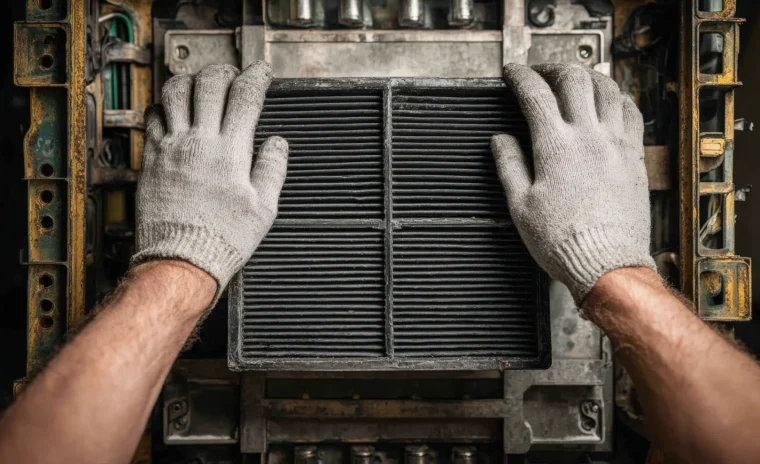
Dirty air filters restrict airflow, causing overheating, component failure, and dramatically shorter equipment life.
Air filter neglect ranks among the most common and damaging mistakes homeowners make, yet it remains one of the easiest to prevent. A clogged filter restricts airflow through the system, forcing the blower motor to work harder, reducing efficiency, and causing a cascade of mechanical problems that shorten equipment lifespan by years.
When airflow decreases due to a dirty filter, the furnace cannot distribute heat properly throughout the home. The heat exchanger becomes excessively hot because insufficient air passes over it to carry heat away. This overheating condition causes the limit switch to cycle the burners on and off repeatedly, creating thermal stress that cracks the heat exchanger over time. The blower motor runs continuously under increased load, wearing out bearings and windings until it fails prematurely.
Restricted airflow also compromises indoor air quality and comfort. Dust and allergens that should be captured by the filter instead circulate through living spaces. Temperature becomes uneven, with some rooms remaining cold while others overheat. The furnace runs longer cycles trying to reach the thermostat setting, consuming more energy and driving up utility bills without achieving comfortable conditions.
Filter replacement frequency depends on several factors including filter type, household occupancy, pets, and local air quality. Standard one-inch fiberglass filters require monthly replacement during heating season. Pleated filters rated MERV 8 to 11 typically last 60 to 90 days. High-efficiency MERV 13 to 16 filters may need replacement every 30 to 45 days because they capture more particles and restrict airflow sooner.
Homes in Concord with pets, multiple occupants, or located along dustier roads should check filters more frequently. During peak heating months from December through February, when furnaces run almost continuously, filters accumulate debris faster than during milder weather. Many homeowners install filters in October and forget about them until spring, by which time the filter has been completely blocked for months and the furnace has sustained significant damage.
Set a recurring reminder on your phone or mark filter replacement dates on a calendar. Purchase filters in bulk so you always have a clean one available. Check the filter monthly by removing it and holding it up to light. If you cannot see light passing through, the filter needs immediate replacement. This simple five-minute task prevents thousands of dollars in repair costs and extends your furnace’s operational life by years.
When airflow problems have already developed due to long-term filter neglect, professional hvac repair service can assess damage to the blower motor, heat exchanger, and other components before they fail completely. Catching these issues early often means repair rather than replacement.
Cranking up the thermostat won’t heat your home faster and leads to wasted energy.
Cranking the thermostat to 75 or 80 degrees when you feel cold does not heat your home faster and creates multiple problems that stress your heating system and inflate energy costs. Furnaces deliver heat at a fixed rate determined by their BTU capacity. Setting the thermostat higher simply makes the system run longer, not hotter, while encouraging harmful operating patterns.
Extended run times caused by excessive thermostat settings force components to operate continuously without rest periods needed for cooling and stress relief. Blower motors, designed for intermittent operation with breaks between cycles, overheat when running for hours without stopping. Electrical components experience accelerated wear. Gas valves and ignition systems cycle less frequently but remain energized for extended periods, shortening their service life.
High thermostat settings also waste substantial energy and money. Each degree above 68°F increases heating costs by approximately 3 percent. A home maintained at 76°F instead of 68°F consumes roughly 24 percent more energy throughout the heating season. In Concord, where winter heating bills already represent a significant household expense, this unnecessary consumption adds hundreds of dollars annually to utility costs.
The perception that higher settings provide faster heating stems from misunderstanding how furnaces work. The system produces heat at maximum capacity whenever the thermostat calls for warmth, regardless of how high you set the target temperature. Setting the thermostat to 80°F when the house is 65°F does not generate more heat per minute than setting it to 70°F. It simply instructs the furnace to continue running until reaching the higher target, consuming excess energy without improving comfort during the warmup period.
Programmable and smart thermostats prevent this mistake by maintaining consistent, efficient temperature settings. Programming your thermostat to lower temperatures during sleeping hours and when the house is unoccupied reduces runtime and component wear while cutting energy consumption. A typical setback schedule might maintain 68°F during waking hours, 62°F overnight, and 65°F during work hours when the home is empty.
For optimal efficiency and equipment longevity, set your thermostat between 68 and 70 degrees during occupied hours and lower it by 7 to 10 degrees during sleep or absence. Dress appropriately for indoor winter temperatures rather than trying to replicate summer warmth. Use blankets, layered clothing, and localized heating like electric throws in frequently occupied spaces instead of overheating the entire home.
If your home struggles to maintain comfortable temperatures even with reasonable thermostat settings, the problem lies with the heating service system’s capacity, insulation, or air leaks rather than the thermostat setting. Running the furnace harder by cranking up the thermostat will not solve underlying efficiency problems and only accelerates equipment wear. A proper assessment can identify whether you need insulation improvements, ductwork sealing, or system capacity adjustments.
Smart thermostats also provide usage data showing how long your furnace runs daily. If you notice the system operating continuously or cycling very frequently, those patterns indicate problems requiring attention before they cause damage. Temperature management strategies that work with your equipment’s design rather than against it preserve system life and control costs.
Closing vents in unused rooms creates harmful pressure imbalances in your ductwork.
Closing vents in spare bedrooms, storage rooms, or other infrequently used spaces seems logical to many Concord homeowners trying to reduce heating costs. The reasoning appears sound: why heat rooms you do not use? Unfortunately, this practice creates pressure imbalances throughout the duct system that force the furnace to work harder, reduce efficiency, and can cause significant damage over time.
Modern furnaces and duct systems are engineered as balanced systems designed to distribute a specific volume of heated air throughout your home. When you close vents, you do not reduce the amount of air the furnace produces. Instead, you increase static pressure in the ductwork, forcing air through the remaining open vents at higher velocity and pressure. This imbalance stresses seams and joints in ductwork, often creating leaks that waste conditioned air in attics, crawl spaces, or wall cavities where it provides no benefit.
The increased pressure also forces the blower motor to work against greater resistance, consuming more electricity and generating excess heat that can trip limit switches or overheat components. In extreme cases, closed vents can cause the heat exchanger to overheat and crack, a failure that typically requires complete furnace replacement due to the safety hazards a cracked heat exchanger creates.
In Concord’s winter climate, where temperatures regularly dip into the 20s and 30s overnight, maintaining balanced airflow becomes particularly important. The temperature differential between indoor and outdoor air puts additional stress on heating systems, and any inefficiency compounds energy waste. Homes built in the last two decades with open floor plans and centralized return air grilles are especially vulnerable to pressure imbalances when vents are closed.
If specific rooms consistently feel too warm, the correct solution involves adjusting dampers at the trunk lines (if your system includes them), or consulting with an HVAC contractor about zoning options that properly balance airflow rather than simply blocking vents. Proper zoning systems include multiple thermostats and motorized dampers that work together to maintain system balance while providing room-by-room temperature control.
Keep all vents fully open and unobstructed by furniture, curtains, or storage items. If you want to reduce heating in certain areas, slightly close (not fully shut) a few vents while monitoring system performance. Never close more than 10-15% of vents in your home. For questions about optimizing comfort and efficiency in your specific floor plan, contact local heating specialists who can evaluate your system and recommend appropriate solutions that will not damage your equipment.